After Decades in Labs, Bastrop’s Chimpanzees Are Headed to Sanctuary
By UU Animal Ministry of Houston | November 18, 2026
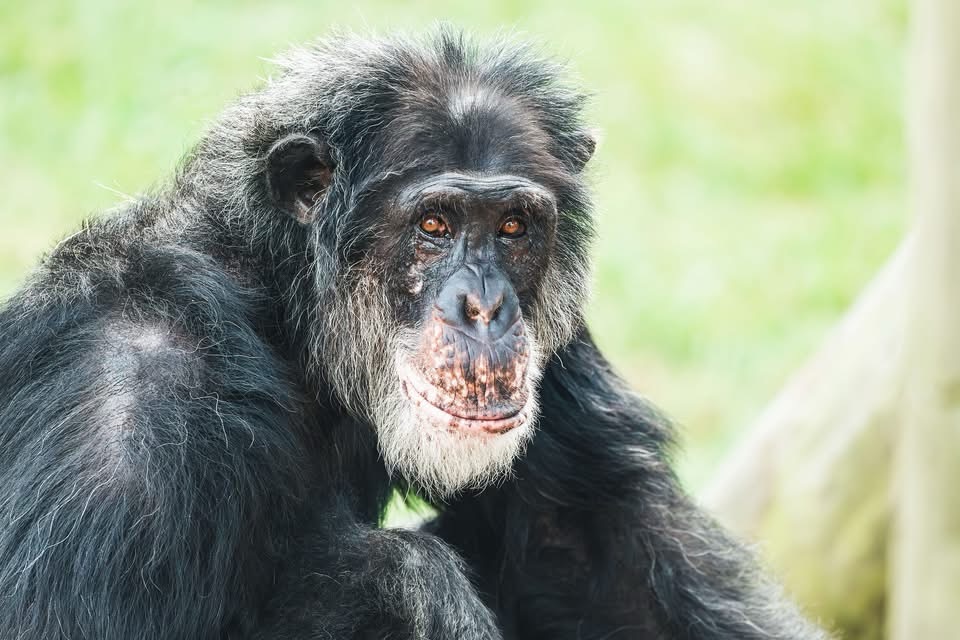
Bria was born in a laboratory 31 years ago and has never lived outside one. Tanya, now 57, was captured in Africa as an infant and spent decades in laboratory facilities, where she was used in biomedical research. Both are among the 33 surviving chimpanzees at the Keeling Center in Bastrop, Texas, who are now expected to move to sanctuary.
On November 18, the National Institutes of Health (NIH) announced that it would move its last remaining chimpanzees from the Bastrop research facility to Chimp Haven, the federal chimpanzee sanctuary in Keithville, Louisiana. Transfers are expected to begin in early 2027, with timing guided by each chimpanzee’s health and social relationships. At Chimp Haven, they’ll have space to explore outdoors and spend time with other chimpanzees.
Bria and Tanya’s stories give a sense of how long these animals have waited. Bria spent two years on loan to another laboratory, where she was used in a malaria study. Tanya spent 45 years at a laboratory where she was used in biomedical experiments. Public records don’t establish how many years each chimpanzee was actively used in experiments. What we do know is that some have spent decades living in research facilities, including years after NIH ended its support for chimpanzee research.
What changed in 2015? The U.S. Fish and Wildlife Service issued a rule extending endangered status under the existing Endangered Species Act to captive chimpanzees. The rule took effect on September 14, 2015, and helped bring invasive chimpanzee research in the United States to an end. That November, NIH announced it would stop supporting biomedical research on chimpanzees and committed to retiring its chimpanzees to sanctuary. Congress had already passed the Chimpanzee Health Improvement, Maintenance, and Protection (CHIMP) Act in 2000, establishing the federal sanctuary system.
Are other chimpanzees still in U.S. labs? Yes. Humane World Action Fund estimates that as many as 100 privately owned chimpanzees still live at three U.S. research facilities. That figure describes where they are housed. It does not mean they are currently being used in invasive experiments. One Louisiana facility plans to move its chimpanzees to Project Chimps, a sanctuary in Georgia.
For UU Animal Ministry of Houston, this announcement is a chance to celebrate what years of advocacy made possible and to remember the chimpanzees who died while waiting for sanctuary. We look forward to the day Bria, Tanya, and their companions can step outside at Chimp Haven. We want that same chance for every chimpanzee still living at a research facility.


Leave a Reply